Showing posts with label atlantic puffins. Show all posts

Monday, July 24, 2017

Discovering Iceland- An Overnight on Flatey Island

We'd seen Flatey Island three days before when the ferry Baldur, crossing Breiðafjörður Bay, stopped there.  It unloaded day-trip passengers and potable water. Today, we would leave our van on the boat, taking only an overnight bag and photo gear.  (Our van would be waiting for us at the ferry terminal in Stykkishólmur.) The island of Flatey is about 1-1/4 miles long.

We had an easy departure time at 09:15 from the Brjánslækur ferry wharf.  We were all eager to explore Flatey.  At the terminal, our overnight baggage for the island went in a freight box to be off-loaded.  Right on time, the Baldur approached and executed a 180° turn to back up to the vehicle ramp.  It wasted no time; it has both bow and stern loading, plus bow thrusters.


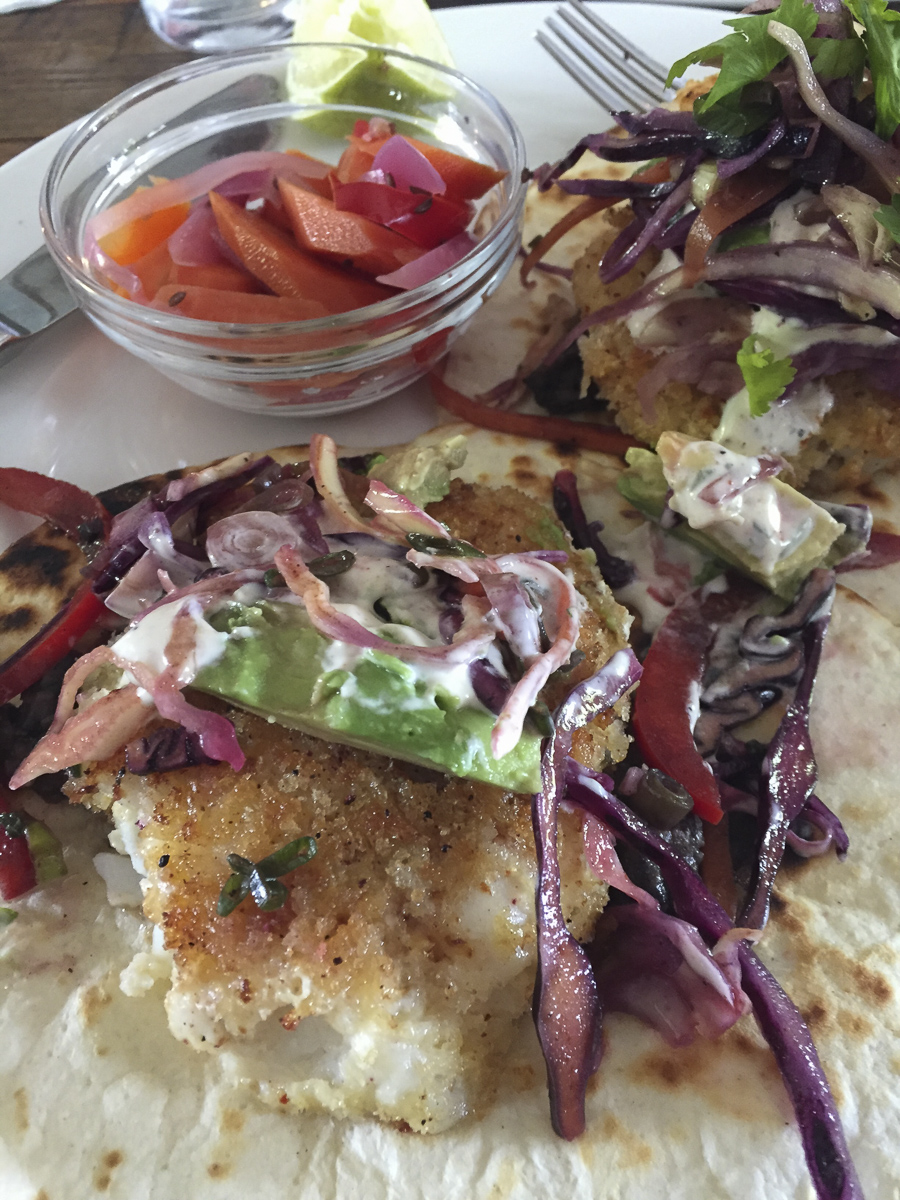
Once ashore on Flatey, you walk.  It is a modest 1/4 mile to the only hotel on the island. The hotel has a small utility vehicle to transfer our luggage.  The accommoda- tions were quite nice. The island may be remote, but the food was not spartan.  How about a cod tacos with pickled veggies? It spoils the traveler.

Of course, we did not come to Flatey for the luxury but rather for the scenery and the birds. I've been on other islands where there were no real roads, and it is liberating.  Life is simpler and the children play soccer with joy, or search the shore for polished stones.  Adults have time to sit on the porch and socialize over a bottle of wine. The pace of life on Flatey was noticeably easier.  All but two families are summer cottagers. In winter it is likely very quiet with no children because there is no school.

A walk around the island finds a lot of  interesting scenes.  A boatman is rowing out to one of the boats anchored in a partially submerged volcanic cone called Höfn on the map. It is a perfectly sheltered anchorage.


There is a rusted and long abandoned tricycle left on the side of the trail near the hotel.

Farther down the trail is a homemade wheel barrow.  I saw some modern ones with lightweight plastic tubs - more efficient - but not as creative.


The island's church stands on the highest part of the island.  With only two year-round families, it did not seem to have any activity.  We saw many small churches in the countryside, often speaking of an early time when substantial fishing communities supported them.  Such was the case on Flatey.


Exploring Flatey begins with a short walk from the hotel towards the bird cliffs.   A small wetland reveals the ubiquitous Mallard, in this case a duckling.  I had in mind something more exotic.


 It did get better.  This is a Red Phalarope. It was picking for food in the seaweed at low tide.


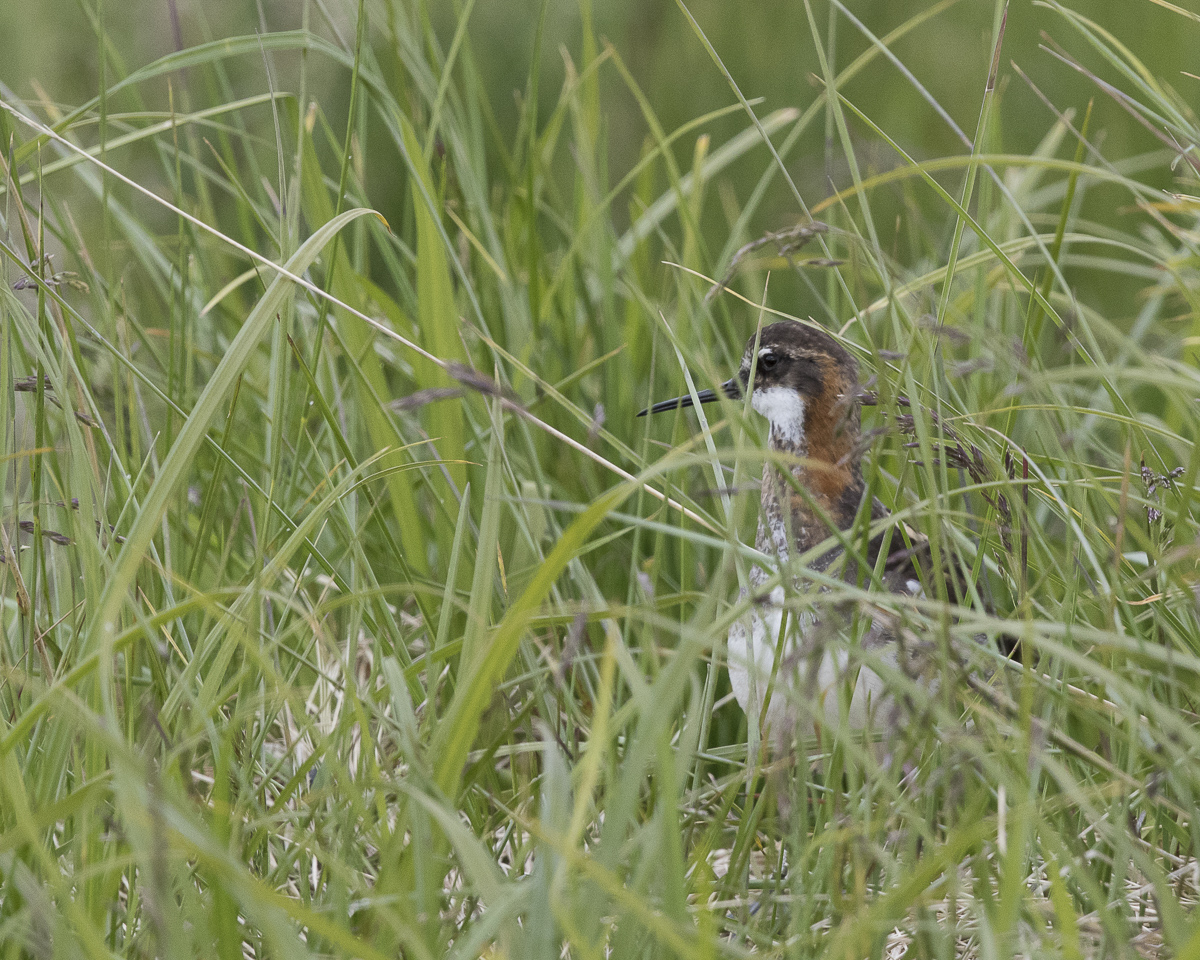
On the trail from the ferry wharf, there was a field of thick grass and several Red-necked Phalaropes were making a lot of noise with each passing person.  Close inspection located a nest some 30 feet from the trail, and very well hidden.  The little bit of dried grass stalks beneath the bird was the only tip that this was a nest.

There was another surprise, Snow Buntings.  Only these were not in winter plumage. They were frequent on the bluff above the cliffs, and seemed to be picking small insects from the many small pink flowers.


Flatey certainly had a rich array of birds. The sun rises on Flatey around 03:00 or a little before.  It is a pretty gradual event.  I still wanted more Atlantic Puffin images, including some with the beak full of fishes for their chicks in the burrows. I'd seen them that evening in poor light. 

Long before breakfast on the next morning, I arose to try once again for the puffin image I wanted.  In the early morning quiet, the sheep were bedded along the way, and not at all wary of people.  Arriving at the cliffs, I settled down low below the crest of the hill so the incoming puffins would not see me.  They were more wary than those at Latrabjarg.


I could pick up the incoming Atlantic Puffins far offshore and watch their flight pattern.  Usually they came in for a pass and then made a loop back out to sea before deciding to land.   The first several thwarted my effort as they either changed course abruptly, or disappeared behind the bluff just as the scene came together.  This was tough, but finally one bird came in nicely.


Even better, the Puffin landed on a rock outcropping before deciding to go to the burrow.  In its beak is a jumble of slender sand eels for the chicks.  It posed right and left. The bird was not actually posing, but looking around to decide if it was safe.  Oh, the joy!


I walked back to the hotel feeling so rewarded that I didn't care if breakfast was only dry toast, as long as there was coffee.  After a wonderful hot shower, the breakfast was (as I expected) much more than toast.  I pretty much chilled out until the Baldur arrived at 13:00 to continue our travels. 

I loved Flatey, and only wished I could have had another day.  Now it is off to huge waterfalls and other scenery.  There will still be birds, but also a tiny church and maybe a geysir, as they are called in Iceland.

Paul

Thursday, July 20, 2017

Discovering Iceland- On to the Latrabjarg Bird Cliffs

Our anticipation grew as we approached the Latrabjarg Bird Cliffs.  They are in the rugged Westfjords where roads are largely unpaved and often hug steep hillsides. Guard rails? Berms? Not really.  But the views are terrific.


These roads are not kind to small vehicles. Our ten-passenger Mercedes van was ideal.  Also comforting was that Jóhann Óli Hilmarsson was an experienced local driver.  There can be long distances to traverse, so slow driving was not an option.   It can get rough; the van's high clearance made accessing many locations possible.


Arriving at the bird cliffs, we experienced the strong winds sweeping up from the ocean below and Atlantic Puffins along the edges of the tall cliff. 


Pam made this photo of an Atlantic Puffin peeking up over the edge of the cliff.  Unlike the Puffins we would see later, these were not afraid of people.


If one was ready to lie flat on the grass right up to the cliff's edge, really close photos were possible.  Our photo guide, Nikhil Bahl, did just that.  By the time I developed some comfort with the edge, the puffins had moved from the edge.


Still, some striking images were possible.

We had two days at Latrabjarg which was about an half hour from our hotel in Breiðavik.  A great number of other birds are nesting along the seacoast, so there were many "distractions" along the roads to the cliffs.  On the next day, we were offered a Ringed Plover with a nearly helpless chick on a beautiful white sand beach.


Although we kept our distance, one adult still offered the broken wing ploy.  We limited our time in the vicinity.  There were plenty of other birds in the area to keep us firing away with our cameras.


On the inland side of  the road, there was a  small stream where we found a Red-necked Phalarope feeding.  We would see more of them at another stop. It was an urgent feeder, rarely pausing.


The birds are so plentiful in summer here, likely because there is a dearth of predators.  In short order that morning we found an Oyster Catcher seen at right and a Dunlin seen below.


It is time to get back to the cliffs and another charming bird, the Razorbill.  This pair was obviously courting on a small outcrop, where I summoned the bravery to approach the edge.


On our final evening at the Latrabjarg Bird Cliffs,  a most unusual event interrupted my pursuit of fresh Puffin photos.  As I walked toward the higher section of cliffs, a Common Murre chick dropped out of the sky onto the tall grasses.  Really! I believe one of the marauding Great Black-backed Gulls had snatched it from an unguarded nest, but lost hold of it as it flew overhead. The chick furtively scurried about seeking cover and finally decided my feet would be adequate.


The obvious question was what to do with the chick.  The location of its nest was somewhere down on the cliff, and no sane person would attempt to return it.


There was another complication due to the presence of an Arctic Fox actively working the cliffs.  There were numerous eggs shells lying around, suggesting it had been successful in robbing eggs from the nesting birds.  One side says the fox has young to feed and the other sympathizes with the helpless chick.  Interfere or let nature take its course?  In the end we took the chick back in our van to leave it with the hotel staff who would attempt to feed it.


To this day, I am not sure the outcome from our choice was any better than the alternative.

The next morning was an early departure to catch the Ferry Baldur for an overnight on Flatey Island.  It was a wonderful stop that I will save for the next installment.

Paul


Friday, September 12, 2014

Atlantic Puffins

Few birds attract the fascination like Atlantic Puffins. These seabirds' appearance is endearing.  They are only seen readily when they come to isolated islands to nest in late spring.  Once fledged, they disappear for years until ready to join the nesting cycle. We've sponsored a pair of puffins through the Lab of Ornithology for several years, and read each year's report on the success of our birds. So, we were intent to find some puffins on this trip, even though it is late, and we were likely to only see the fledglings.

While we saw a few puffins around the Bonavista lighthouse, they were nesting on the hidden side of the island near the light.  The advice to us was to go to nearby Elliston, billed as the root cellar capital.  That's a new one.

So, puffins like a rocky island with some turf to burrow in. The sites look like this one a few miles from Elliston. But, unlike this island, the one in Elliston is separated from land by a very narrow channel.

Arriving at the location, we spotted the first of many root cellars. They dotted the hills, indicating where homes once stood. Inside the outer door is a passage to a second door protecting the stored veggies from the hard winter's cold. The abandoned cellars are a testament to both the decline of the traditional cod fishery and to the limited growing season in Newfoundland.  Only root crops are practical in the garden.  

The town of Elliston has an annual puffin festival and welcomes puffin watchers in good style. A local resident welcomed us and briefed us on the best path and safety.  It ended up being an easy 10 minute walk towards the sea and across a narrow neck of land. This is pretty nice.  A lot of puffin sites require a boat ride and a wet landing from a bouncing tender.

So, what did we find?  Joining three pro photographers on a grassy knoll, we were maybe 150 feet from a gang of juvenile Atlantic Puffins. Their burrows were easily spotted.


There seemed to a cycle among many of the birds wherein they would gather along the edge of the  island and launch into flight from there.


So, I just isolated on those birds and waited to see the wingtips move.  It worked pretty well.


The folks at Elliston were really accommodating. Well, truthfully that was true for everyone we met during our nine days in Newfoundland.  Here, they even provided a nice relaxing puffin chair to rest in after the hike back from seeing the birds. Very creative, eh?

Now, allow me to provide some details for the photographers about these birds-in-flight photos. I used a Nikon Series 1 mirrorless V2 camera with the FT1 adapter attached to a Nikon 70-200mm f/2.8 lens. I shot at 15 frames per second! The exposures  were 1/1000 second at  f/8, ISO 800.  At 200 mm, the equivalent focal length in a 35 mm DSLR is 540 mm. This rig weighs about 4 pounds and is easily hand-held.  An equivalent full frame 35 mm camera, tripod and telephoto lens weighs over 22 pounds. I would never have carried the 22 pound rig onto an aircraft, nor to some of the locations where I used the Nikon V2. I am sold on the benefits of this little camera for travel.

Paul Schmitt