Thursday, May 2, 2019

On the Way to Patagonia

On the way to Patagonia, I stopped in Buenos Aires for a rest day after the overnight flight. (I just needed a pause before another 3 hour flight.) There is a lot to take in there, and a bit of research led me to spend the afternoon in Cementerio de Recoleta. It has bountiful memorial statuary plus the crypts of notable personages, including Evita Peron, Nobel Prize winners, military heroes and more.  My visit coincided with a national day of remembrance for those lost in the Malvinas invasion.  So, it was crowded.

A first observation is that no space is wasted. The crypts and monuments are tightly packed with no grassy spaces as we might find in the United States. Most of the spots are for multiple members of a family. It appears that some families have continued to prosper and maintain their crypts, and some have declined such that maintenance has ceased.

The individual spaces reflect a wide range of artistic content. My cell phone recorded this aging vault with a mix of missing glass and reflections of surrounding neighbors. (It was manipulated into a simulated painting style.)


Arguably, the most visited crypt contains the remains of Evita Peron.


 Other names on the plaques were linked to Evita.  Obviously, it still gathers a lot of attention.

 Other family repositories gather simpler recognition - faded marigolds.


Recoleta is also known for the resident cats.  Water and food is left out for them.


The cemetery also has some amazing statuary at the ground level of crypts.  Usually the interments were below ground level.  This one was well-maintained and memorable.


In a few places, the memorial commanded a primary location away from the crowded rows of crypts.


 Capturing the essence of some statuary was a challenge well worth the final result.


You can image that at some point in time, I realized Recoleta was more than an afternoon's exploration.   It also offered small hidden views that were a challenge to render in a single image. I had to balance on stone blocks to align the small window with the stained glass window on the adjacent interior wall.


This was visual candy for the photographer. I've been to the famous Pere Lachaise Cemetery in Paris, and the artistic content here rivaled it, and sometimes even surpassed it.  And, time was running out.  This corner of the cemetery surprised me. 


And, this crypt with a military guard closed my exploration.


Yes, I made a mistake setting aside only an afternoon for Buenos Aires.

Paul Schmitt

Tuesday, April 30, 2019

...and now for something different.

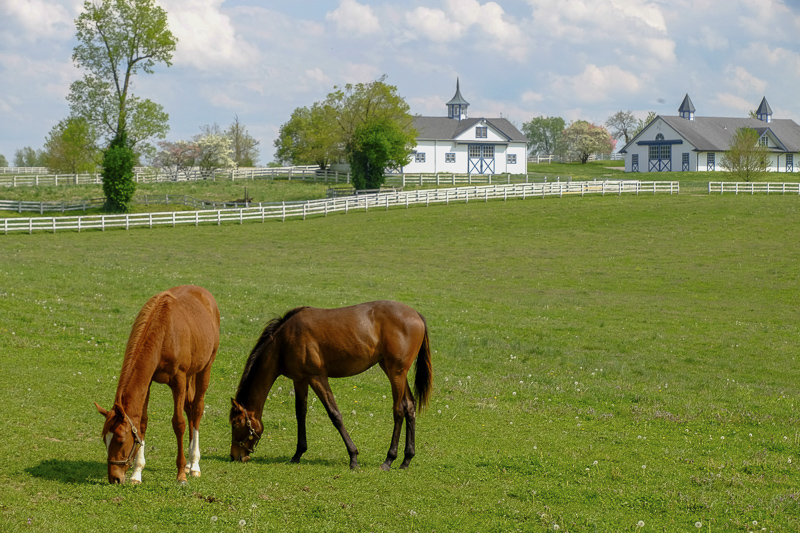
Pam and I had reason to travel to Louisville on business, and listened to our friend Krissy who suggested we had to stop at Keeneland Racetrack.  True to her word, it is a beautiful, friendly track nestled in the heart of the Bluegrass.  It's surrounded by beautiful horse farms in lush, rolling country.


I traveled with just a simple Fuji mirrorless camera, but it was fine for my purposes. Here are a few highlights.  In the paddock, I found what has to be the largest Rolex ever.


The day begins with the track "ponies" entering through the paddock.  Beautiful horses.


The thoroughbreds enter the outer paddock for some light warm-up and are quickly brought forward to be saddled.  Beautiful animals.


Of course, there is the track bugler to call the horses to the track.

Half of the day's races were on turf.  Depending on the distance of the race, the start can be right in front of the grandstands, so the break from the gate is clearly seen.


About two minutes later, the finish was again right in front of our seats. This race was a real run-away.


We had an enjoyable day at the races, and afterwards, we drove around the lane behind Keeneland to see some of the farms.  While Churchill Downs in Louisville is surrounded by a densely urban neighborhood, Keeneland is the opposite.  Parking is easy, the pace comfortable and people pretty laid back.

 And, just like the people at the track, the locals on at the farms were friendly too.


I'm guessing we'll have reason to continue our visits to Louisville, and it would be nice to again time the visit to a race day at Keeneland.

Paul


Sunday, April 21, 2019

Many Happy Returns (of Spring)

While I work to digest (meaning edit) the roughly two thousand images for a trip to Patagonia, the sights of returning birds lured me to take a break from the computer.   Here are a few images ranging from ordinary subjects to interesting behaviors that are worth sharing.

No spring is right without the sight of a brilliant red Northern Cardinal ready to defend its territory from any intruder.  The call of another male was enough to pull him out of the thick cover this morning.


I was surprised to see a Palm Warbler in this stand of Red Osier along an abandoned farm road.  He was primed to sing once the day got brighter. 


The best was a group of about a dozen Yellow-rumped Warblers.  This one landed on a branch and inspected it closely.


Warblers are sharp-eyed.  This bird looked closely at the small side branch just below its beak.   See anything unusual?


I did. It plucked up the well-disguised caterpillar.


For full disclosure, I was not certain what I had seen until I got back to my computer to look more closely.  This happened extremely fast. 

This surely energized my willingness to get up early for birding and photography.

Regards,


Paul Schmitt


Saturday, March 2, 2019

Seabirds at Barnegat Light


For years, reports of the winter birds at Barnegat Lighthouse on  the New Jersey coast have caught my attention.  Weather recently looked cold enough to hold the birds from going north, while providing a window for good driving conditions. So, with a good friend, the trip happened.

The lighthouse stands 171 feet above the sea on Long Beach Island.  The island itself is jammed with expensive vacation homes and clusters of  businesses for the mobs of summer visitors.  In winter, it is quiet except for many contractors adding to the expensive real estate. 

The lighthouse is a state park with exceptionally clean restrooms and parking.  (Just be sure to exit before the gate is locked at 4 pm.  In winter there is a small amount of parking outside.)  The birds are seen mostly in the jetty, where a heavy-duty line of stone attempts to hold back the sea.  The first several hundred feet of the jetty has a finished surface and sturdy steel railing.  Beyond that point, it is necessary to climb up on the rocks with great care. It is a windy place, and should there be ice, it would be risky. We had good weather.


There were a large number of Long-tailed Ducks in the jetty that would dive for as long as three minutes at a time. The males are a strikingly beautiful diving duck.  The tail seems to more often be trailing in the water.  When the males display, the neck is elongated, as below, and it seemed that that was often accompanied by an erect tail.

Long-tailed Duck, male


While the male and female are similar in size and shape, she has no elongated tail nor more patterning than a black patch on her neck roughly mimicing the male. Her beak is plain.

Long-tailed Duck pair


Sadly, I have no video to capture the male's musical piping call.  It complements the spirited behavior of these little ducks.

The currents in the jetty on a windy day toss the birds about, making it hard to catch clear photos, and their fast movements make images hard to obtain. I did get a few.  The first is in-flight.  There is little warning of these fast fliers launching into the air. This image is one of only four flight photos in 1-1/2 days.


The other impossible image to capture is when they decide to dive.  This is a fitting ending to my Long-tailed Duck images.


There were other attractions beginning with Common Loons often coming very close to the rocks.


So, what was bringing the loons to the jetty?  Little green crabs.


Another occasional visitor was the Common Merganser.  Sure, I have lots of images of them, but this one of a female was notable for the way the sun made the bird's plumage dance.  Plus, she was so close that I could not get her tale in the frame. 

Did I mention that it was really cold in the mornings?  Above my lower layers were insulated bibs and an ultra warm hooded parka with heat packs in mittens.  As we photographed, there were two Coast Guard patrol boats outside the jetty.  It brought back memories of when I tested on small Navy boats out on the Chesapeake Bay in January. It was never pleasant.  To bring it back clearly, the boats finished patrol and sped in the jetty with crew sheltering on the upper deck. Rough going.

This was a good introduction to Barnegat.  I'd never been in photo range of Long-tail Ducks before.  Maybe next year I could find Snowy Owls and Harlequin Ducks?  These birds are often in the area, but not this time.  They are a good reason to try this again in 2020.

Paul Schmitt


Monday, February 18, 2019

Costa Rica- the Highlands

We ended our time in the highland cloud forest.  Our rain gear remained in our baggage because it is the dry season in February.  But, we were prepared! Next time I will only bring a small umbrella.

At elevation, we mostly saw little critters with a preponderance of rapidly moving hummingbirds. I prefer natural settings for  subjects so there are none showing feeding stations.  Compounding this is the speed for most hummingbirds.


There are a group of nectar feeders that rob nectar without pollinating the flowers.  They cut directly into the nectar site.  I believe this little brown bird is doing just that.  He perches beneath the cluster of blooms and .....


...  uses its sharp beak to enter at the right spot.


 Only occasionally was I fast enough to get focus and grab an image.

I never could do this with film.  It would take half a dozen rolls to get just one shot like this, or the next one.


There were unexpected visitors like this Red-tailed Squirrel.  It came in for the ripe fruit on a platform feeder.  It looks very similar to the Red Squirrels in New York.


While the hovering hummers only allow a few seconds to capture a photo, sometimes one will choose to perch in full sunlight.  Then you have maybe 30 seconds, which is a luxury.


That birds was clearly visible. This next image is a favorite for me because it offered a narrow tunnel of visibility.


There was one larger visitor, a Black-cheeked Woodpecker.  It seems all woodpeckers have sharply defined patterns.


The highland cloud forest, even in the dry season, offers a fine display of flowers including bountiful numbers of succulents.  This cluster was outside our lodging in the Savegre River valley.


Every lodging we visited had beautiful flower beds like these.


It is little surprise that Costa Rica is such a popular destination. The Tico are serious about maintaining a balance with their natural resources.  Pura Vida!  It reflects their philosophy.

Have to visit again, maybe in the wet season?

Paul Schmitt

Saturday, February 16, 2019

Costa Rica Naturally!


John Muir famously counseled the traveler to saunter rather than rush.  On our second visit to Costa Rica, Pam and  I booked with Natural Habitat. We were drawn to the small group size and a pace better suited to actually seeing more of the flora and fauna in natural settings. Arriving in San Jose at midday a full day before the program began, our driver, Marko, delivered us to the beautiful Bougainvillea Hotel. Entering the grounds, one is greeted by lush beds of flowers and bird feeders at the restaurant windows. This is not a hotel squeezed onto a small tract of land. There are several acres of gardens with trails.


Arriving a day early reduced the stress of possible flight delays coming from the wintry USA. Our free day was easily passed exploring the hotel grounds and finding abundant birds, plus many vibrant flowers.  Everywhere one goes in the Bougainvillea, one finds creative architecture and decorations.  The attentive and friendly staff perfectly complements the hotel's beauty.

Here are a few of the discoveries we made walking the grounds. Orchids are found growing on the trees along a path.


A wide variety of palms and other trees offered a hint of the variety we would see later when we arrived at Tiskita Lodge in the extreme south coast near the border with Panama.

The grounds were not just manicured lawns. The tennis courts were hidden within a dense cover bisected by a path.


Many birds were there, including a Lesson's Motmot.  It was feeding on the ripe fruit of a tree.  Note the twin "paddles" at the end of its tail.  Beautiful bird.


Our time at the hotel passed comfortably, aided by abundant discoveries like butterflies,


...graceful flowers,


.....  and other pleasant surprises.


After a pleasant day in the gardens, we met our guide Roy and the other six members of our group on Saturday, and prepared our baggage for a Sunday morning charter flight to Golfito from the domestic airport. Our driver, Jimmy, would take us to the flight and then make the 5-1/2 hour drive to Tiskita Lodge with the majority of our bags.


We were each allowed 30 pounds for the flight. It went into a pod on the belly of the Cessna. My camera bag used up most of my allowance. Wisely, I kept Pam's small Fuji XT-1 travel camera with me. The weather was beautiful, and Roy convinced our pilots to fly along the Pacific coast for a view of  a feather called the Whale's Tail.  Our luck was that we were at low tide, so it was clearly visible.


Our second location on the itinerary would be only a few kilometers from the Whale's Tail and Uvita Beach.

As we flew over the Pacific coastal areas we saw a mix of mountain and coastal planes with large plantations of  palm oil trees. Soon the pilots  began our approach to Golfito. The dense cover of trees became closer as the aircraft began to follow a narrowing valley.  Soon, we were on a glide path defined by the tree tops.  Our guide, Roy, exclaimed "Welcome to the rain forest!" and seconds later we were on the runway. It was an exciting start to our adventure.

A local driver was awaiting with his bus to take us to Tiskita.  The roads very quickly switched from paved to otherwise as we rode through a mix of farms and forest.  Just short of Tiskita, one of our party shouted out "Scarlet Macaws!"  The driver quickly stopped and pulled off as everyone scrambled to pull out cameras or binoculars.  A brilliantly colored pair were high in trees right next to the road.  These are just two images of many that were captured.


What a start to the trip!  During the next two days, we began with a 6:00 am bird walk, and after breakfast explored some of Tiskita's trails as a group.  Here are a few of our discoveries.

Three-toed Sloth


Squirrel Monkey


 I noticed that some of the palms with a broad fan of leaves were crimped over as seen to the right. Rather than reaching toward the sky, they folded downward.  Odd, I thought, but my unfamiliarity just accepted it as the usual. On a morning hike  Roy became interest in a group of such palms, and went off trail (after carefully probing the forest floor with his extended tripod legs to confirm no snakes were underfoot.)  His interest was directed at some palms where the fronds were more upright like an A-frame roof.